

Let me start with a small confession.
A few years ago, when people talked about artificial intelligence, I pictured robots stealing jobs, talking like humans, and probably judging my late-night Google searches. Fast forward to today, and AI isn’t some distant sci-fi idea anymore. It’s quietly sitting in our phones, helping businesses grow, suggesting what we should watch next, and even correcting our spelling when our brain refuses to cooperate.
Artificial Intelligence & Tech Innovation
Artificial intelligence and tech innovation have moved from buzzwords to everyday reality. And honestly, that shift has been both exciting and slightly overwhelming.
In this article, I want to talk about AI and tech innovation the way real people experience it. Not in a corporate whitepaper tone. Not in a “future is scary” lecture. Just a grounded, human look at how AI is changing our work, our lives, and our decisions, for better and sometimes for worse.
I’ll share practical examples, honest opinions, real benefits, real risks, and a few things nobody warns you about.
So grab a cup of tea or coffee, and let’s talk about artificial intelligence like humans do.
What Artificial Intelligence Really Means (Without the Fancy Words)
Artificial intelligence sounds complicated, but the idea is simple.
It’s about teaching machines to think, learn, and make decisions in ways that feel human.
That’s it.
AI doesn’t have emotions. It doesn’t “understand” the world like we do. It recognizes patterns. It analyzes data. It predicts outcomes based on what it has seen before.
When Netflix recommends a show you end up binge-watching, that’s AI.
When Google finishes your sentence before you do, that’s AI.
When your phone unlocks by recognizing your face on a bad hair day, yes, that’s AI too.
Tech innovation is what makes all of this possible. Faster processors. Smarter algorithms. Massive amounts of data. Better connectivity.
AI is the brain. Tech innovation is the body that allows it to function.
The Moment AI Quietly Took Over Our Daily Lives
Here’s the funny thing.
Most people say, “I don’t really use artificial intelligence.”
Then they check Google Maps.
Order food online.
Ask Siri a question.
Scroll social media.
Use spam filters in email.
AI didn’t knock on the door and announce itself. It slipped in quietly and made itself useful.
That’s why artificial intelligence and tech innovation feel less like a revolution and more like a smooth upgrade to life.
And once you notice it, you start seeing it everywhere.
Why Artificial Intelligence Is Growing So Fast Right Now
AI didn’t suddenly appear out of nowhere. It’s growing fast because three things finally came together.
1. Data Is Everywhere
Every click, search, purchase, and scroll creates data.
AI feeds on data the way humans feed on experience. The more data it has, the smarter it becomes.
2. Computing Power Is Cheaper
What once required massive servers is now possible on smaller, faster, and cheaper machines.
That’s tech innovation doing its job quietly in the background.
3. Businesses Want Smarter Decisions
Companies don’t want guesses anymore. They want insights.
AI helps predict customer behavior, reduce costs, automate boring tasks, and improve results. And when money talks, technology listens.
Artificial Intelligence in Everyday Work Life
This is where things get interesting.
AI isn’t just for tech companies. It’s changing almost every profession.
Writers and Creators
AI tools help brainstorm ideas, edit content, and speed up research.
But here’s my honest opinion.
AI can assist creativity, but it can’t replace human experience. It doesn’t know what failure feels like. It doesn’t understand cultural nuance the way humans do.
The best content still comes from real voices.
Marketers and SEO Experts
AI helps analyze keywords, predict trends, optimize campaigns, and understand audiences faster.
Used correctly, artificial intelligence becomes a powerful assistant. Used blindly, it creates generic content that nobody wants to read.
The human touch still matters.
Developers and Engineers
AI can write code, find bugs, and suggest improvements.
That doesn’t make developers useless. It makes them faster and more focused on problem-solving rather than repetitive tasks.
Small Businesses
Chatbots, automated emails, smart inventory systems, and AI-powered ads are leveling the playing field.
You don’t need a massive team anymore. Smart tech innovation can act like one.
The Truth About AI and Job Fear
Let’s address the elephant in the room.
“Yes, but will artificial intelligence take our jobs?”
Short answer: Some jobs, yes. All jobs, no.
History tells us something important. Every major tech innovation changed work, not eliminated it.
AI replaces tasks, not people.
Repetitive, predictable tasks are at risk. Creative, strategic, emotional, and human-centered roles are not going anywhere.
The real danger isn’t AI.
The real danger is refusing to adapt.
People who learn how to work with AI will replace those who don’t.
That’s not fear. That’s reality.
Artificial Intelligence in Healthcare: Where Tech Feels Almost Magical
This is one area where AI genuinely impresses me.
Doctors use AI to detect diseases earlier, analyze scans faster, and reduce human error.
AI systems can spot patterns in medical data that humans might miss after long hours and exhaustion.
But let’s be clear.
AI doesn’t replace doctors. It supports them.
A machine can analyze data. Only a human can deliver empathy, explain options, and make ethical decisions.
Tech innovation works best when it enhances humanity, not replaces it.

How AI Is Changing Education (And Why That’s a Good Thing)
Education has needed disruption for a long time.
Artificial intelligence brings personalization to learning. Students can learn at their own pace. Teachers get insights into where students struggle.
AI tutors don’t get tired. They don’t judge. They adapt.
But again, balance matters.
Human teachers shape values, motivation, and curiosity. AI can’t replace that.
The future of education is collaboration between human wisdom and machine intelligence.
Artificial Intelligence in Daily Consumer Tech
Let’s talk about the tech we actually touch every day.
Smartphones
Camera improvements powered by AI. Battery optimization. Voice assistants. Facial recognition.
Your phone is smarter than most people realize.
Smart Homes
Lights that adjust automatically. Thermostats that learn your habits. Security systems that recognize faces.
It’s convenient, but it also raises questions about privacy.
E-commerce
Product recommendations, dynamic pricing, fraud detection.
Sometimes it feels like the internet knows what you want before you do. That’s both impressive and slightly unsettling.
The Privacy Problem Nobody Likes Talking About
Here’s where I stop smiling and get serious.
Artificial intelligence needs data. A lot of it.
That means privacy becomes a real concern.
Who owns your data?
Who controls it?
How is it used?
Tech innovation without ethical responsibility is dangerous.
AI systems can reflect bias, invade privacy, and manipulate behavior if not regulated properly.
Being excited about AI doesn’t mean being careless about it.
As users, we should ask questions. As businesses, we should act responsibly.
Bias in Artificial Intelligence: A Human Problem in Machine Form
AI isn’t biased by nature.
It learns from data created by humans. And humans, unfortunately, are biased.
That bias can appear in hiring tools, facial recognition, lending systems, and more.
The solution isn’t to abandon AI. It’s to improve the data, increase transparency, and involve diverse perspectives in development.
Tech innovation should reduce inequality, not reinforce it.
Artificial Intelligence and Creativity: Friend or Foe?
This debate never gets old.
Can AI be creative?
It can generate art, music, and writing. But creativity isn’t just output. It’s intention, emotion, context, and lived experience.
AI remixes what already exists. Humans create meaning.
The most powerful results come when humans use AI as a creative partner, not a replacement.
How Businesses Can Use AI Without Losing Their Soul
Here’s practical advice.
If you’re running a business, don’t chase AI just because it’s trendy.
Start with problems.
Where are you wasting time?
Where are customers frustrated?
Where are decisions slow?
Then apply artificial intelligence intentionally.
Use AI to improve service, not eliminate human connection. Customers still want to feel heard.
Skills That Matter in an AI-Driven World
You don’t need to become a programmer overnight.
But these skills matter more than ever:
- Critical thinking
- Adaptability
- Communication
- Creativity
- Emotional intelligence
AI handles logic well. Humans handle meaning, values, and relationships.
That’s our advantage.
The Future of Artificial Intelligence and Tech Innovation
So where are we headed?
More automation, yes.
Smarter systems, definitely.
Deeper integration into daily life, absolutely.
But the future isn’t machines replacing humans.
It’s humans using machines to become more efficient, informed, and creative.
The real winners won’t be the ones who fear AI or worship it.
They’ll be the ones who understand it.
My Honest Advice for Navigating the AI Era
Don’t panic.
Don’t ignore it.
Don’t blindly trust it.
Learn how artificial intelligence works at a basic level. Use it as a tool. Question it when needed.
Tech innovation is neutral. How we use it decides whether it helps or harms.
Final Thoughts: AI Is a Tool, Not a Destiny
Artificial intelligence and tech innovation are shaping the world faster than ever before.
That can feel scary. It can also feel empowering.
At the end of the day, AI doesn’t decide our future. We do.
The choices we make, the values we protect, and the way we integrate technology into human life will define what comes next.
If we stay curious, ethical, and human, AI can be one of the most powerful tools we’ve ever created.
And honestly, that’s a future worth building.
Artificial Intelligence & Tech Innovation: How It’s Quietly Changing Our Lives
If you asked me a few years ago what artificial intelligence really meant, I probably would’ve said something vague like “robots” or “future tech stuff.” Back then, AI felt distant. Interesting, yes—but not personal.
Today, it’s very personal.
Artificial intelligence and tech innovation are no longer background concepts discussed only by engineers or tech giants. They’re shaping how we work, learn, shop, communicate, and even think. And the wild part? Most of us are using AI every single day without even noticing it.
This article isn’t about hype. It’s about reality. The good, the confusing, the impressive, and the slightly uncomfortable parts of artificial intelligence and modern tech innovation.
What Artificial Intelligence Actually Is (In Plain English)
Artificial intelligence is not magic. It’s not consciousness. It’s not a thinking brain like a human’s.
At its core, artificial intelligence is about machines learning patterns from data and using those patterns to make decisions or predictions.
That’s it.
When Google predicts what you’re about to type, that’s AI.
When your email filters spam automatically, that’s AI.
When YouTube recommends a video you somehow end up watching for 40 minutes, that’s AI too.
Tech innovation is the reason this works so smoothly. Faster chips, cloud computing, better algorithms, and massive data storage all come together to make artificial intelligence practical in real life.
How AI Became Part of Daily Life Without Asking Permission
One thing I find fascinating is how quietly AI entered our lives.
There was no big announcement. No official moment where everyone agreed, “Okay, AI is here now.”
It just… happened.
Smartphones became smarter. Apps became predictive. Websites started feeling personalized. Suddenly, technology wasn’t just responding—it was anticipating.
That’s the power of artificial intelligence mixed with tech innovation. It adapts instead of waiting for instructions.
Artificial Intelligence at Work: Helpful Assistant, Not the Boss
There’s a lot of fear around AI in the workplace, and some of it is understandable.
But from what I’ve seen, AI isn’t replacing people—it’s replacing boring, repetitive tasks.
In content and marketing
AI helps with research, keyword analysis, topic ideas, and optimization. But real insight, storytelling, and opinion still come from humans.
In development and IT
AI speeds up debugging, testing, and system monitoring. Developers still make the big decisions.
In business operations
Automation saves time. AI-powered analytics improve decision-making. Human judgment still matters.
Artificial intelligence works best as a support system, not a replacement for human thinking.
The Job Question Everyone Asks
Let’s be honest.
Yes, artificial intelligence will eliminate some jobs. Mostly repetitive ones. But it will also create new roles, new industries, and new opportunities.
This isn’t new. Every major tech innovation has done the same thing.
The real risk isn’t AI itself.
The real risk is refusing to learn how to work with it.
People who adapt will stay relevant. People who resist change usually don’t.
AI in Healthcare: Where Innovation Saves Lives
This is one area where artificial intelligence genuinely feels meaningful.
AI helps doctors detect diseases earlier, analyze medical images faster, and reduce diagnostic errors. It doesn’t get tired. It doesn’t lose focus.
But here’s what matters: AI supports doctors—it doesn’t replace them.
A machine can analyze data. Only a human can show empathy, explain options, and make ethical decisions.
Tech innovation works best when it strengthens human care, not removes it.
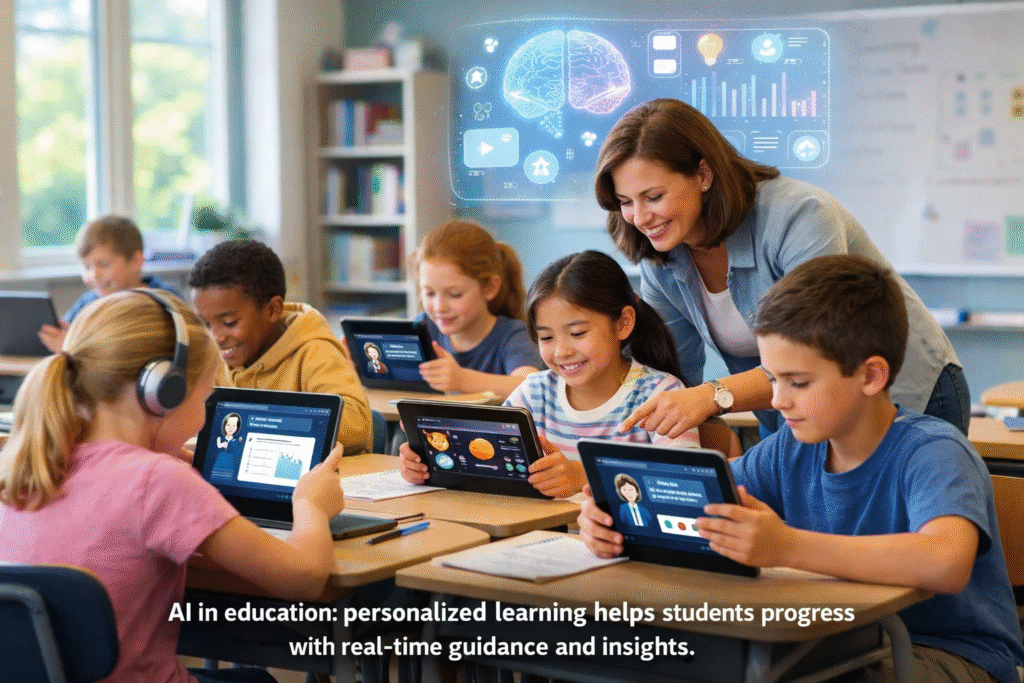
Artificial Intelligence in Education: Learning Gets Personal
Education has always struggled with a one-size-fits-all approach.
Artificial intelligence changes that.
AI-powered learning platforms adapt to individual students. They identify weaknesses, adjust pace, and offer personalized feedback.
Teachers don’t become irrelevant. They become more effective.
Human guidance combined with intelligent technology creates better learning outcomes than either could alone.
Smart Devices and Everyday Tech Innovation
Artificial intelligence is everywhere in consumer technology.
Your smartphone camera uses AI to improve photos.
Your navigation app predicts traffic.
Your smart home learns your habits.
This level of personalization feels convenient—but it also raises questions.
How much data are we sharing?
Who controls it?
How secure is it?
Convenience always comes with responsibility.
The Privacy and Ethics Problem
Artificial intelligence runs on data. And data often comes from us.
That makes privacy one of the biggest challenges in tech innovation today.
AI systems can be incredibly helpful, but they can also be invasive if misused. Transparency, regulation, and ethical design are no longer optional—they’re necessary.
Blind trust in technology is just as dangerous as blind fear.
Bias in Artificial Intelligence Is a Human Issue
AI doesn’t wake up biased.
It learns from human data. And human data reflects human flaws.
That’s why bias can appear in hiring systems, facial recognition, and automated decision-making tools.
The solution isn’t abandoning AI. It’s improving how we build it, train it, and monitor it.
Better data leads to better outcomes.
AI and Creativity: Can Machines Be Creative?
This debate comes up a lot.
AI can generate art, music, and writing. But creativity isn’t just output. It’s intention, emotion, and experience.
Artificial intelligence can remix ideas. Humans create meaning.
The best results happen when AI assists creativity instead of replacing it.
How Businesses Should Use Artificial Intelligence Wisely
Chasing AI just because it’s trendy is a mistake.
The smart approach is simple:
- Identify real problems
- Use AI where it genuinely adds value
- Keep humans involved in decision-making
Customers don’t want robotic experiences. They want efficiency and connection.
Skills That Matter More in an AI-Driven World
You don’t need to become a data scientist to survive the AI era.
But these skills matter more than ever:
- Critical thinking
- Communication
- Adaptability
- Creativity
- Emotional intelligence
AI handles logic well. Humans handle judgment, ethics, and empathy.
That’s our edge.
The Future of Artificial Intelligence & Tech Innovation
Artificial intelligence will continue to evolve. Systems will get smarter. Automation will increase. Tech innovation will move faster than ever.
But the future isn’t about machines taking over.
It’s about humans learning how to use powerful tools responsibly.
The people who understand AI—not fear it or blindly trust it—will shape what comes next.
Final Thoughts: Technology Is a Tool, Not a Replacement for Humanity
Artificial intelligence and tech innovation are transforming the world, whether we like it or not.
That transformation doesn’t have to be scary.
When used thoughtfully, AI saves time, improves decisions, and enhances creativity. When used carelessly, it creates problems we didn’t ask for.
The future isn’t decided by algorithms.
It’s decided by how humans choose to use them.
And that responsibility belongs to all of us.
Oi, galera! Achei o barganha8 show de bola pra quem tá procurando umas promoções maneiras. Naveguei por lá rapidinho e já achei uns descontos bem legais. Vale a pena conferir! E olha, clica aqui: barganha8